Meta Description
Discover essential safety tips for operating textile cutting machines effectively. Improve worker protection, reduce accidents, and ensure a safer textile cutting environment.
Introduction
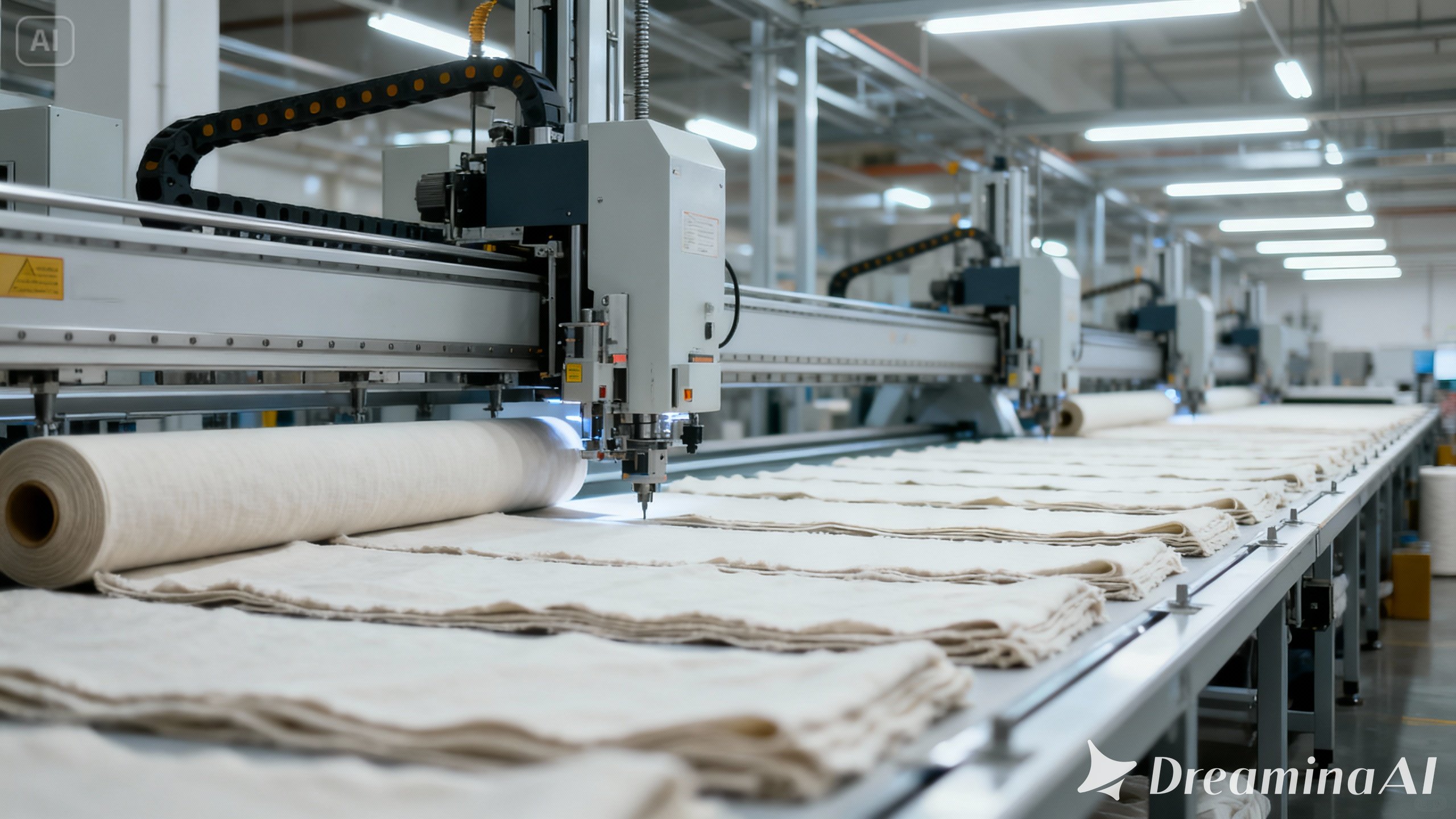
In textile manufacturing, precision and productivity are only valuable when safety is prioritized. While textile cutting machines have advanced in speed and automation, they still present serious hazards if operated improperly. Whether manually controlled or fully automated, these machines demand strict adherence to safety protocols.
To help maintain a secure working environment, the following five safety tips should be implemented across all operations involving fabric cutting machinery.
1. Ensure Proper Operator Training
Before operating any textile cutting machine, ensure that the operator has received proper training. This training should include instruction on machine handling, safety practices, emergency procedures, and maintenance protocols.
Tip: Provide regular refresher courses to reinforce safety culture.
With proper training, people can reduce the likelihood of accidents, and they can use machines to their full potential without unnecessary risk.
2. Use Personal Protective Equipment (PPE)
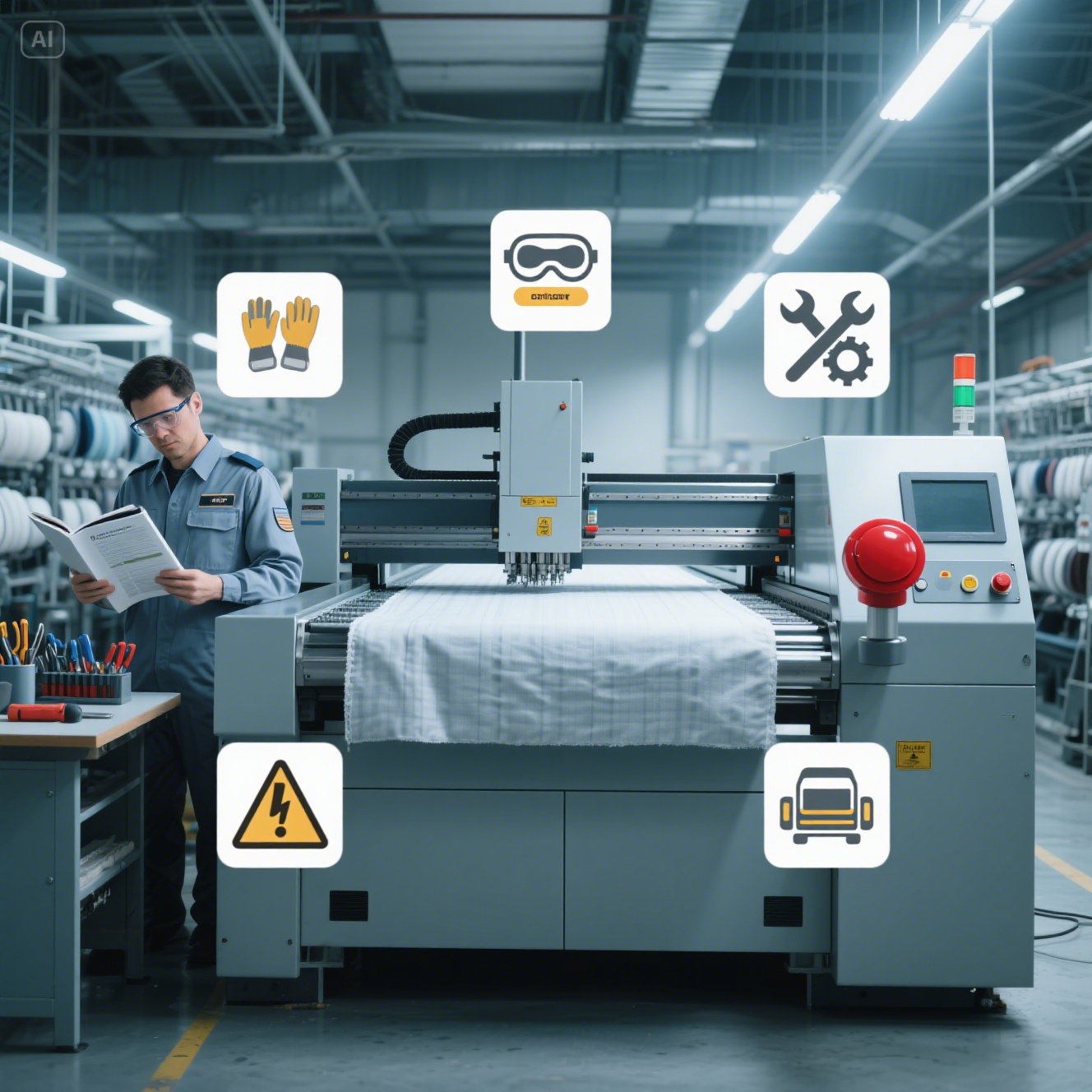
Even with modern safety features, manual errors and material mishandling can result in injuries. Therefore, workers must always wear personal protective equipment (PPE) such as cut-resistant gloves, safety goggles, and appropriate footwear.
Additionally, workers should avoid loose clothing or jewelry, as these can easily catch in moving parts.
Neglecting PPE often causes injuries, even during short tasks.
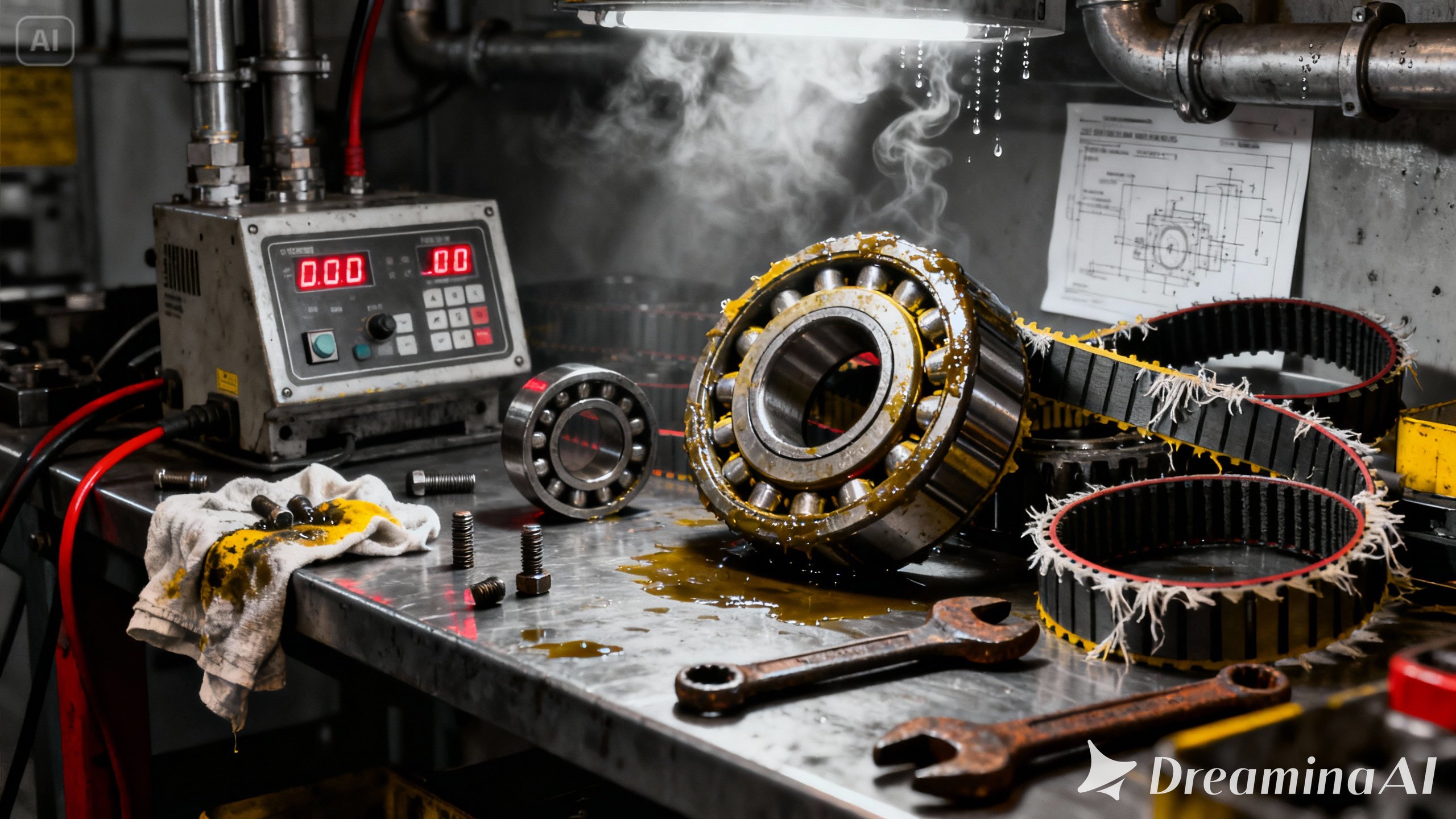
3. Machines Must Be Regularly Maintained
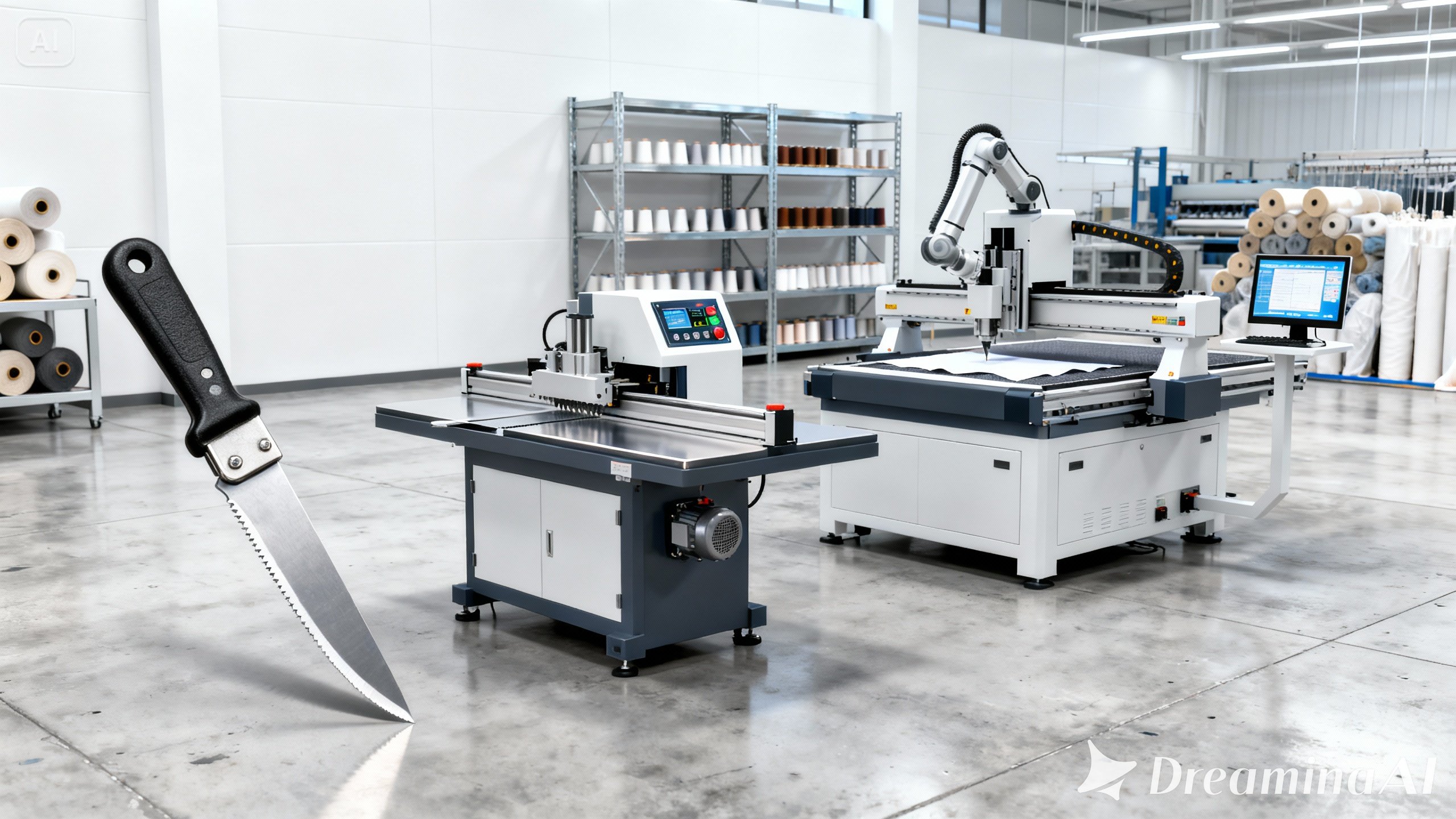
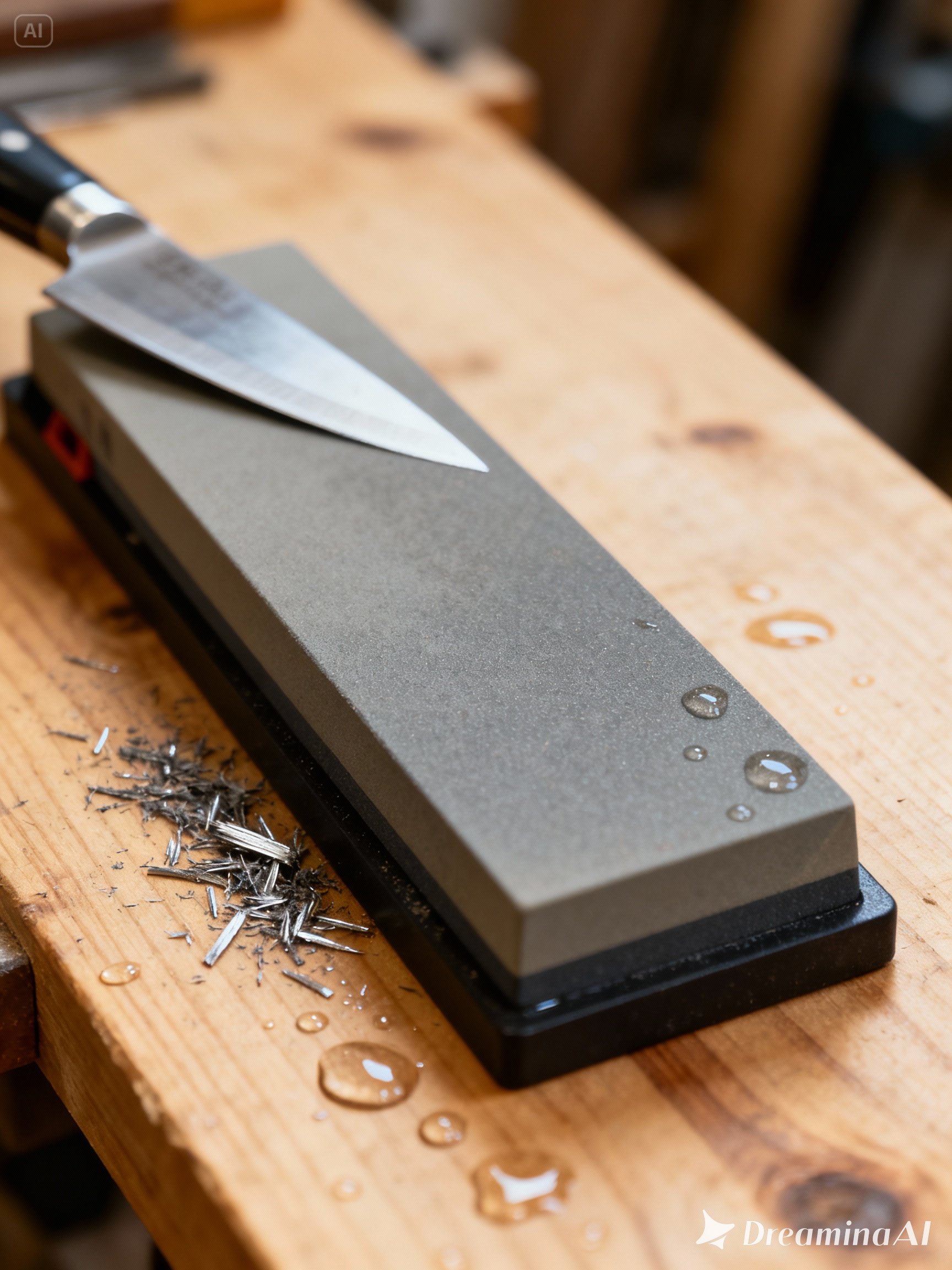
One of the most overlooked safety measures is routine maintenance. Poor maintenance can cause machines to malfunction unexpectedly and create dangerous situations. To prevent breakdowns and accidents, regularly sharpen blades, check motors, and calibrate electronic systems.
Keep documentation of maintenance schedules and enforce them consistently.
When operators perform proper servicing, their safety improves significantly.
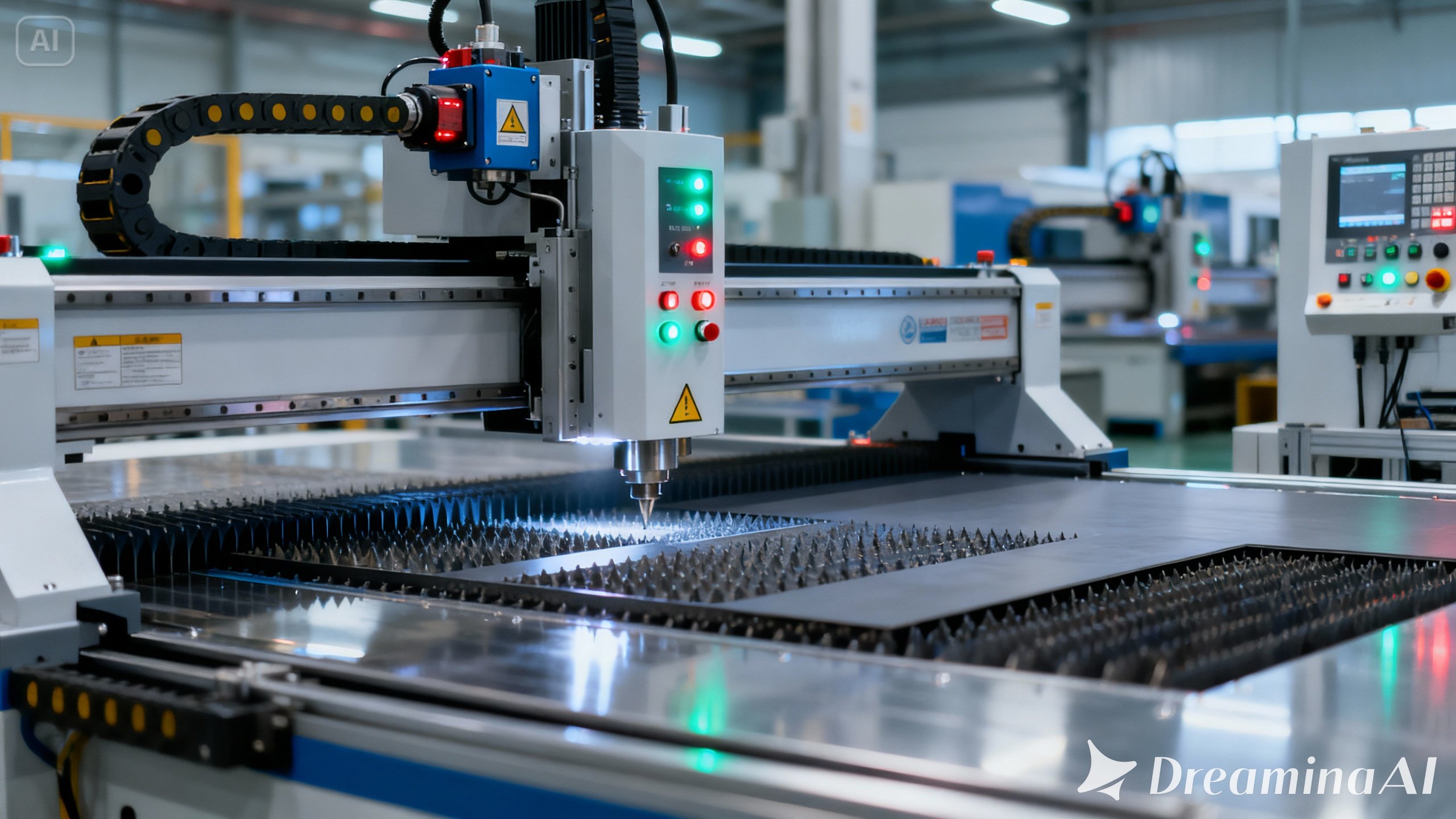
4. Always Use Built-in Safety Features
“Manufacturers design modern fabric cutting machines with built-in safety systems, such as:”
- Emergency stop buttons
- Safety guards
- Touch-sensitive cutoff mechanisms
- Auto-shutoff during malfunction
Unfortunately, operators sometimes disable or ignore safety features to save time.
Instruct operators never to bypass safety features, as doing so significantly increases the risk of harm.
By utilizing all available safety functions, operators can greatly reduce the risk of accidents.
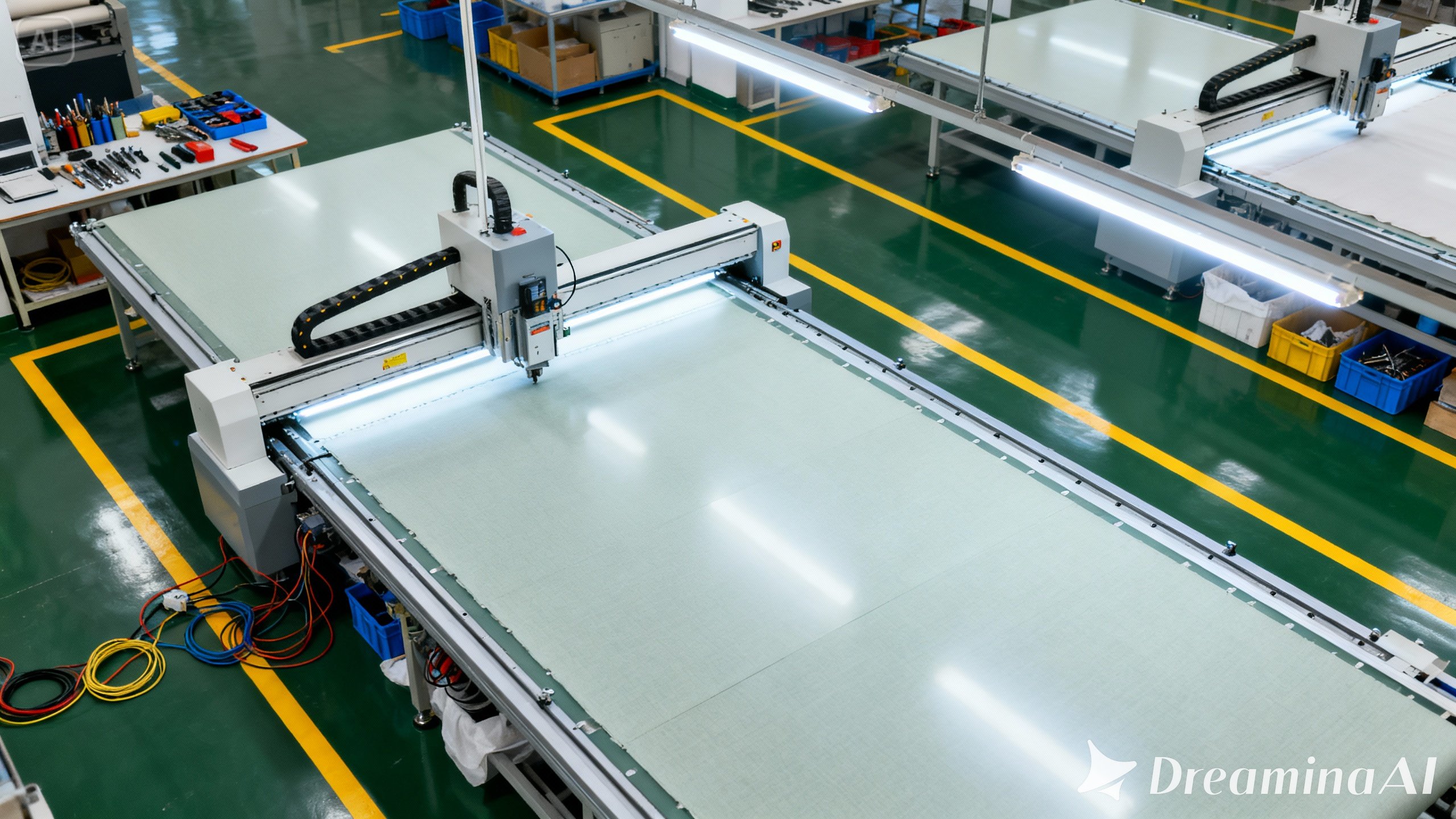
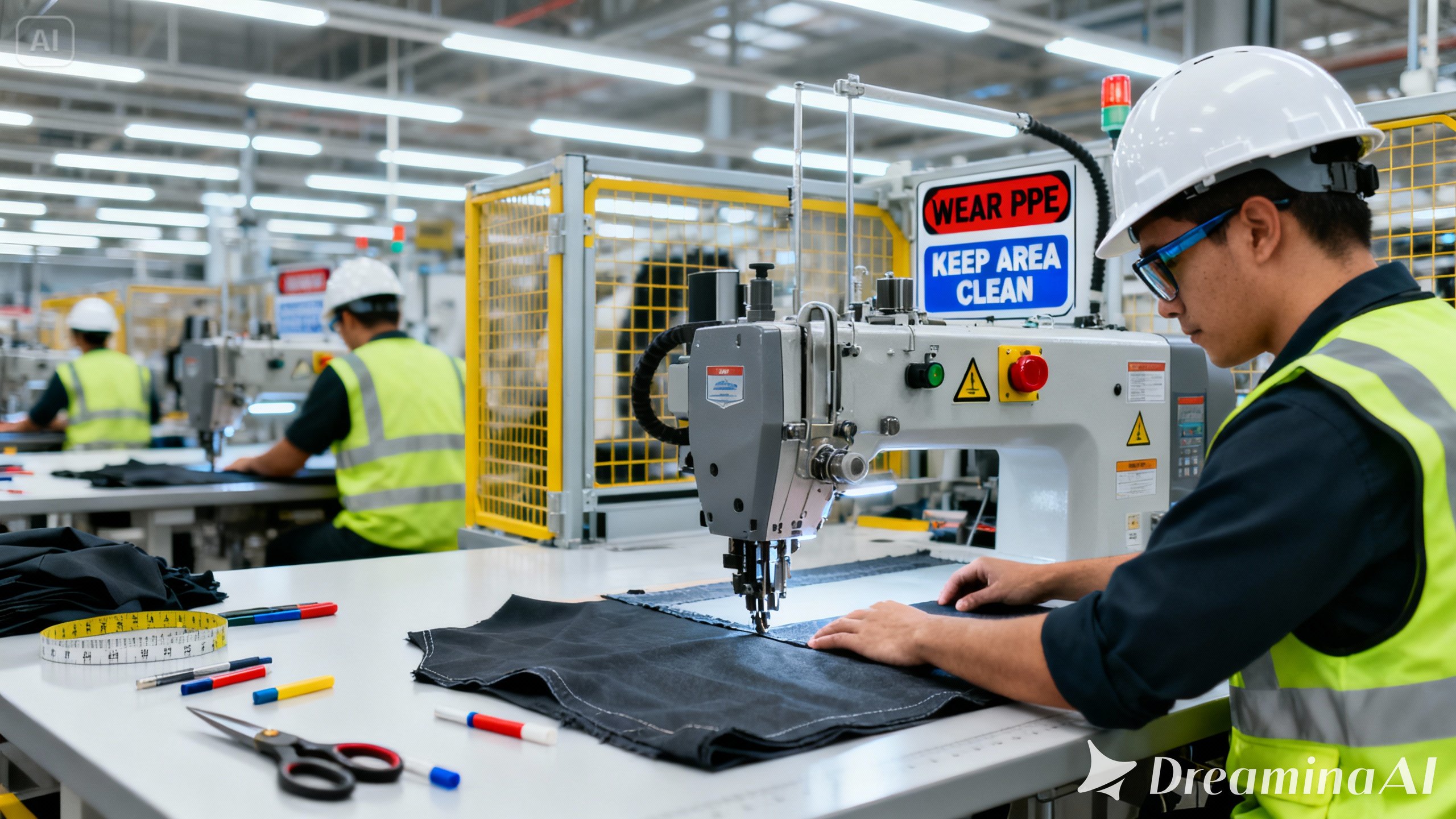
5. Keep the Work Area Clean and Organized
Even with the best equipment and trained personnel, a cluttered environment can cause accidents. Fabric scraps, tools, or spilled liquids near cutting machines can lead to slips or jams.
A clean work area promotes better focus, smoother workflow, and fewer hazards.
Require all operators to clean their stations before and after each shift. Post safety signage clearly in all machine areas.
Conclusion
Textile cutting machines have made manufacturing faster and more precise, but without proper precautions, they can pose serious risks Fortunately, proactive training, proper use of protective gear, regular machine maintenance, and maintaining a safe environment help minimize these dangers.
Following these five essential safety tips can prevent injuries, protect productivity, and ensure the well-being of every operator.